
The Object Lesson
Two days before Pete Hegseth took the stage in Singapore, New Zealand announced it would double its defence spending. He still called it freeloading anyway.

This is worth sitting with. The humiliation of Chris Penk, Minister of Defence — sitting in the audience while the US Secretary of Defence named his country as an example of what not to be — was not a diplomatic accident. It was the point. Washington wasn’t talking to Wellington. It was talking to Seoul, Manila, Bangkok. New Zealand was a prop. Small enough to embarrass without consequence, friendly enough that the embarrassment would land.
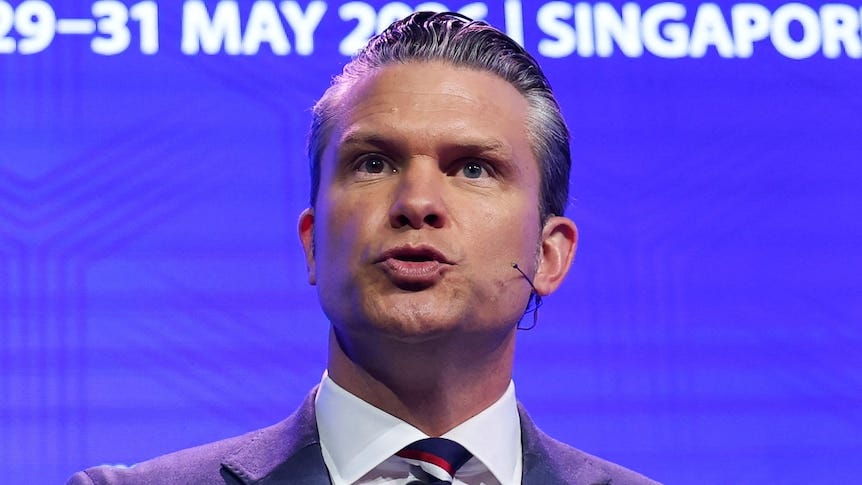
The “freeloading” framing will dominate the coverage. It shouldn’t. The spending number is almost beside the point. Hegseth said as much himself, buried in the language about locking arms and shields: what he actually demanded was visibility. Intelligence integration. The same picture. “Our alliance is meaningless,” he said, “if we don’t have the same visibility as we do.” In the same week, New Zealand’s intelligence agencies received a 20% funding boost — the real demand, answered without announcement, while the public argument remained fixed on a number nobody in Washington actually needed.
The more revealing detail came from Anna Fifield’s reporting (linked below) for Between Giants: that Penk, at the region’s premier security forum, declined to mention China. Not once. Every other minister named the subject. Penk spoke of competition, contest, a deteriorating security environment. China, New Zealand’s largest trading partner, and the reason was in the room, was never mentioned.
Penk arrived in Singapore holding two relationships that cannot both be told the truth at the same time. Washington wants visible alignment: name the threat, buy the hardware, show up alongside allies. Beijing is watching every word, and New Zealand’s export economy depends on its goodwill. Say China and you satisfy one relationship while damaging the other. Say nothing and you satisfy neither, but you survive both. So Penk said nothing, and the decisions spoke instead.
New Zealand is eyeing the Mogami-class frigate Japan recently sold to Australia, frontline warships chosen specifically to maintain interoperability with its only formal defence ally. You don’t buy Japan’s most advanced naval vessels to patrol for Pacific drug trafficking. The hardware choice is the China policy. The silence is the Beijing policy. Both are conducted simultaneously, in the same week, by the same minister, and neither is put to the public as a choice.
That is the real story from Singapore. Not the percentages. Not the freeloading. A small country navigating a trap it cannot name, because the moment it does, the trap is triggered. Washington will demand more. Beijing will retaliate. And New Zealanders, who have never been asked which relationship they are actually willing to lose, will find that someone has already decided for them.
Penk’s composure made sense. The answer to Hegseth was already being given. Just not in any language that forced a decision.
Further reading - I highly recommend reading Anna’s scoop on Hegseth’s comments:

The New Zealand government is stuck in a moral dilemma of its own making, and it doesn’t want to - won’t - can’t - face reality. Meanwhile, it has conflict to the left of it and uncertainty to the right.